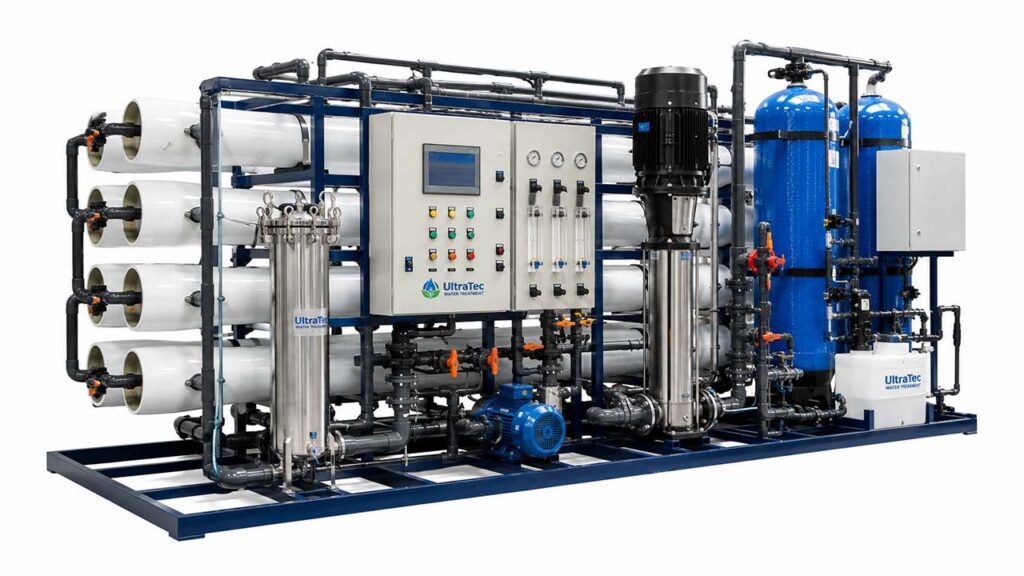
Deionized water (DI water, DIW or de-ionized water) is water that has almost all of its mineral ions, such as cations like sodium, calcium, iron, and copper, and anions such as chloride and sulfate removed. DI Water is the water of choice in many factories and manufacturing settings. It is commonly used in medical, food processing, chemical and semiconductor industry including, industrial cooling applications and manufacturing of cosmetics.
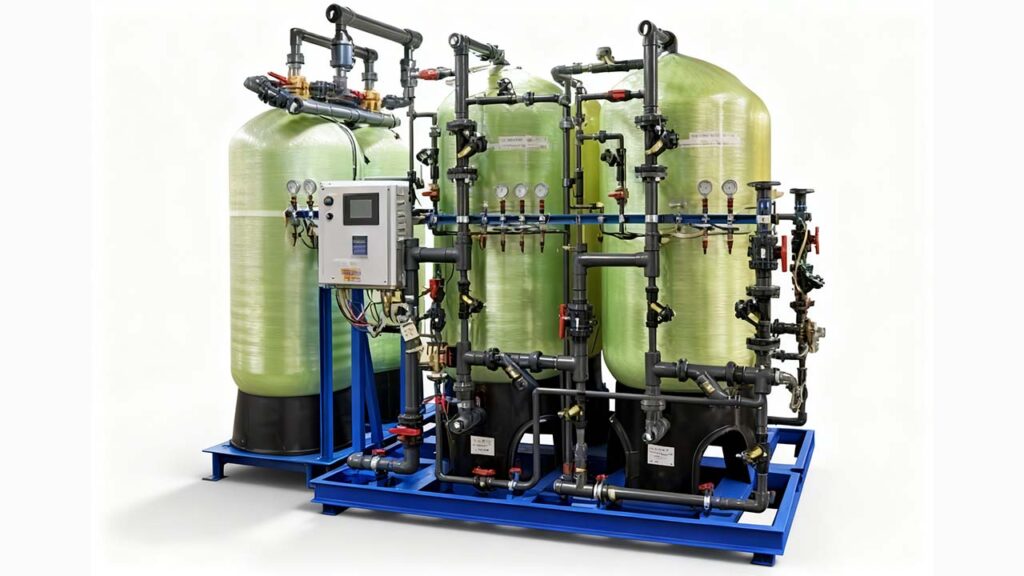
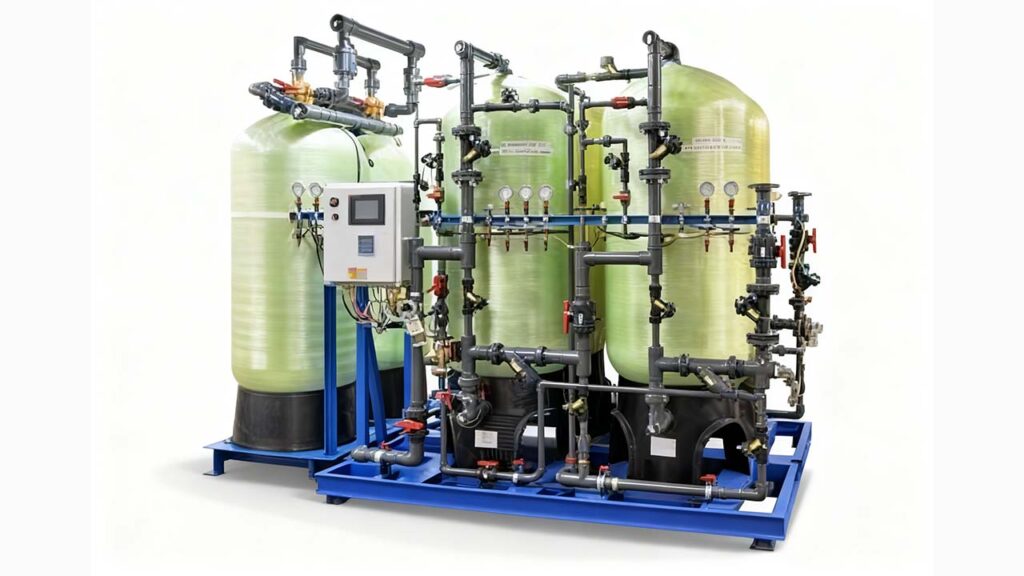
INDUSTRIAL SEPARATE BED DE IONIZER
De-ionization is the removal or reduction of positive ions called cations and negative ions called anions from the water supply. High purity water from 50 to 1 MICROSIEMENS/CM or better can be produced from typical water sources. The cation resin is converted to the hydrogen form and exchanges positive ions for hydrogen. The Anion resin is converted to the hydroxyl form and exchanges the negative ions for hydroxyl.
Resins are designed specifically for deionizer applications, and typically regenerating with 6.4 lbs of 100% HCI per Cubic foot of cation resin and 8.0 lbs. of 100% NaOH per cubic foot for anion resin. Lakeside resins provide high chemical and physical stability, lower pressure drop and greater resistance to bead breakage. Strong or weak base resins are selected based upon the customers water quality requirements. Type 1 or 2 Anion resins are selected based upon the silica residuals required for the specific application. Standard systems utilize pressure compensating educators for drawing chemical.
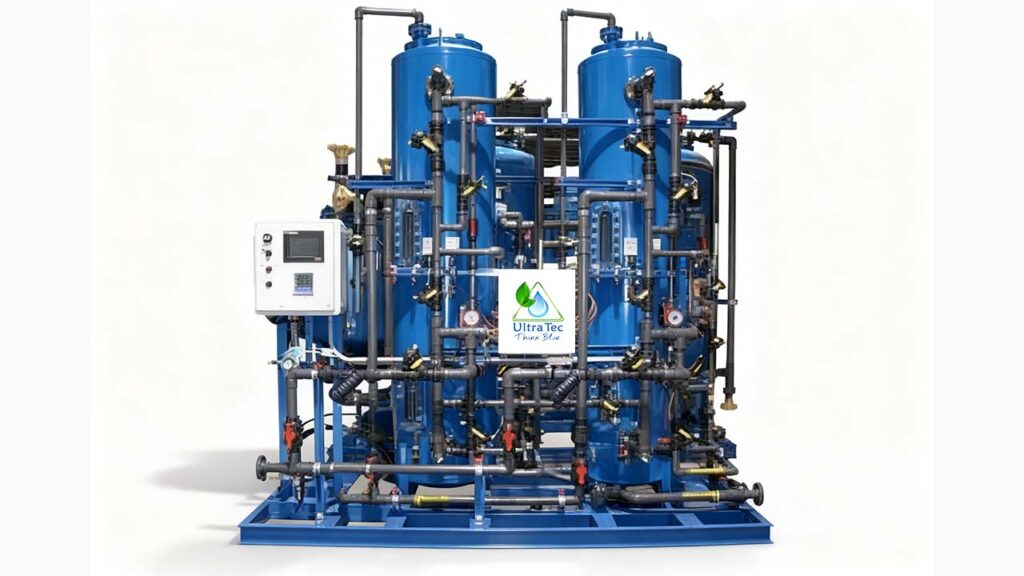
MIX BED DEIONIZER
De-ionization is the removal or reduction of positive ions called cations and negative ions called anions from the water supply. High purity water from 1.0 to 18.3 megaohms/cm and a silica level of .10ppm to 0.01ppm or lower can be produced. The cation resin is converted to the hydrogen form and exchanges positive ions for hydrogen. The Anion resin is converted to the hydroxyl form and exchanges the negative ions for hydroxyl. Resins are designed specifically for deionizer applications regenerating with approximately 6.4 pounds of 100% of HCI per cubic foot for
cation resin and 8.0 pounds of 100% NaOH per cubic foot for anion resin. Lakeside resins provide high chemical and physical stability, lower pressure drop and greater resistance to bead breakage. Type 1 Anion resins are standard to produce the lowest silica leakages and 10% cross-linked cation resins for durability and performance. Standard Cation regeneration is with 32% HCl. Standard systems utilize pressure compensating educators for drawing chemical. We recommended that the total chloride and sulfate content in the dilution water should be below 25 ppm to minimize the corrosion potential. Hard minerals and salts in dilution water can increase metal corrosion, cause formation of scale and deposits
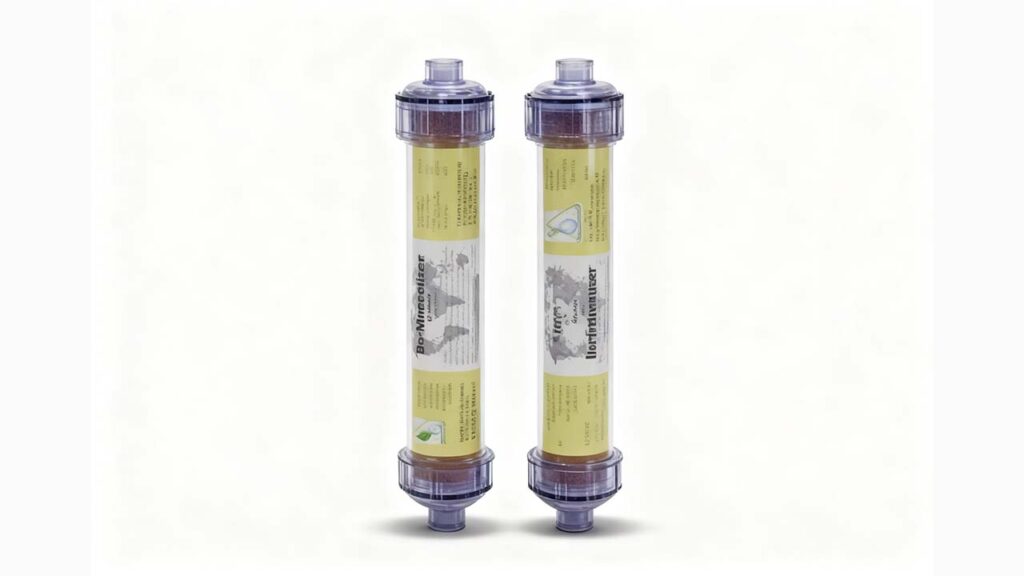
LAB/Aquarium De Ionizer
Model no: UT-215-6
Type: De-ionization(DI) Post Water Filter
Diameter: 53 MM
Length: 254 MM
Max Flow Rate: L/24HR
Max Pressure: 4 BAR
Capacity: About 500 Gallons
Specifications
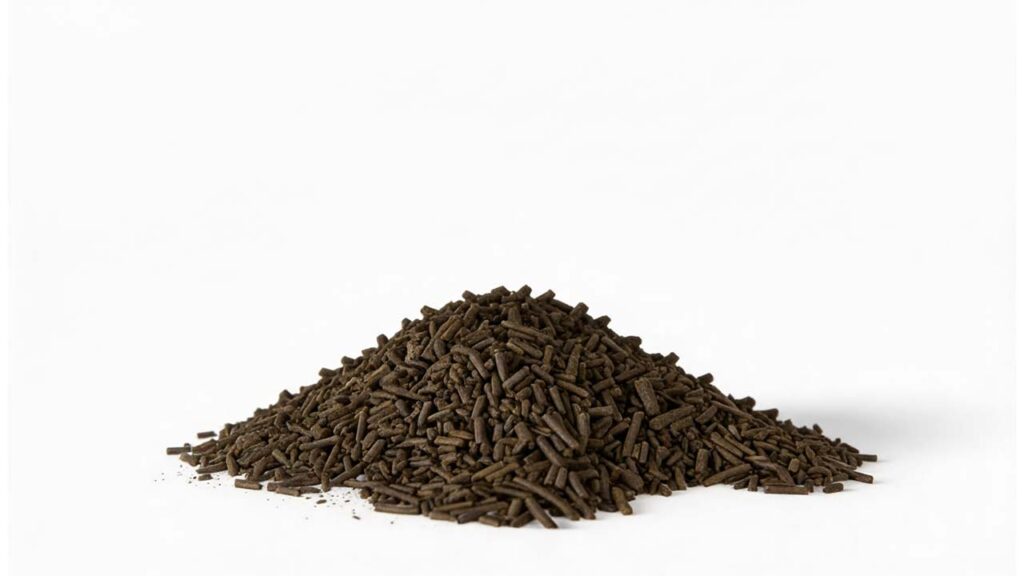
DI is Demineralization by Ionization. A DI filter removes the few mineral ions that make it through the RO membrane; this makes sure that the water is as pure as possible. The DI filter also removes nitrates that are not removed by the membrane. The DI filter is a cartridge filled with an ion exchange resin in the form of small beads. When the water passes by the beads, the minerals and other ions leave the water and attach to the beads.
What This System Does?
Industrial Separate Bed Deionizers are designed to remove dissolved ionic impurities from water by using separate cation and anion exchange vessels. These systems produce deionized water for industrial processes where low conductivity and high water purity are required.
Each system is engineered for site conditions and configured based on feedwater analysis, required water quality, operating flow rate, and application requirements. System performance is verified during commissioning to help achieve the required process water quality.
How It Works?
Feedwater first passes through the cation exchange vessel, where positively charged ions such as calcium, magnesium, sodium, and iron are exchanged with hydrogen ions. The water then flows through the anion exchange vessel, where negatively charged ions such as chloride, sulphate, nitrate, and silica are exchanged with hydroxyl ions.
The hydrogen and hydroxyl ions combine to form purified deionized water. Depending on water quality and operating conditions, the resin can be regenerated to restore system performance.
Models
Features
Applications
Separate cation and anion resin vessels
High-purity ion exchange process
Designed for continuous industrial operation
Low conductivity water production
Regenerable ion exchange resin
Corrosion-resistant pressure vessels
Suitable for automatic or manual regeneration
Available in multiple production capacities
Configured based on feedwater analysis
Installation and commissioning support available
Available Options
Automatic regeneration system
Conductivity monitoring
Flow meter installation
Chemical dosing integration
Duplex system configuration
Skid-mounted design
Stainless steel piping
PLC-based control panel
Custom vessel sizes
Site-specific engineering configuration
Applications
Industrial Separate Bed Deionizers are suitable for applications requiring consistent deionized water quality across a wide range of industries.
Pharmaceutical manufacturing
Food and beverage processing
Electronics manufacturing
Chemical processing plants
Laboratories
Boiler feed water treatment
Cosmetic manufacturing
Industrial cooling systems
Metal finishing industries
Why Choose Ultratec?
Ultratec Water Treatment Equipment LLC is an ISO 9001:2015 certified water treatment company based in Dubai, UAE. Our deionization systems are engineered for site conditions, configured according to feedwater analysis, and sourced from certified global manufacturers. Every system is supplied with installation support, commissioning assistance, and ongoing technical service across the UAE.
Frequently Asked Questions
What is a Separate Bed Deionizer?
A Separate Bed Deionizer uses individual cation and anion resin vessels to remove dissolved minerals and produce deionized water for industrial applications.
How is the correct system selected?
System selection depends on feedwater quality, required water purity, production capacity, and the intended industrial application.
Can the resin be regenerated?
Yes. The ion exchange resin is designed for regeneration using appropriate chemicals under recommended operating procedures.
Which industries commonly use Separate Bed Deionizers?
These systems are widely used in pharmaceutical manufacturing, food processing, electronics, laboratories, boiler feed water treatment, and other industrial processes requiring deionized water.
Does Ultratec provide installation and technical support?
Yes. Ultratec supplies installation support, commissioning assistance, and after-sales technical service throughout the UAE.
Get In Touch
Contact our team in Dubai to discuss your water treatment requirement and receive a solution configured for your site.
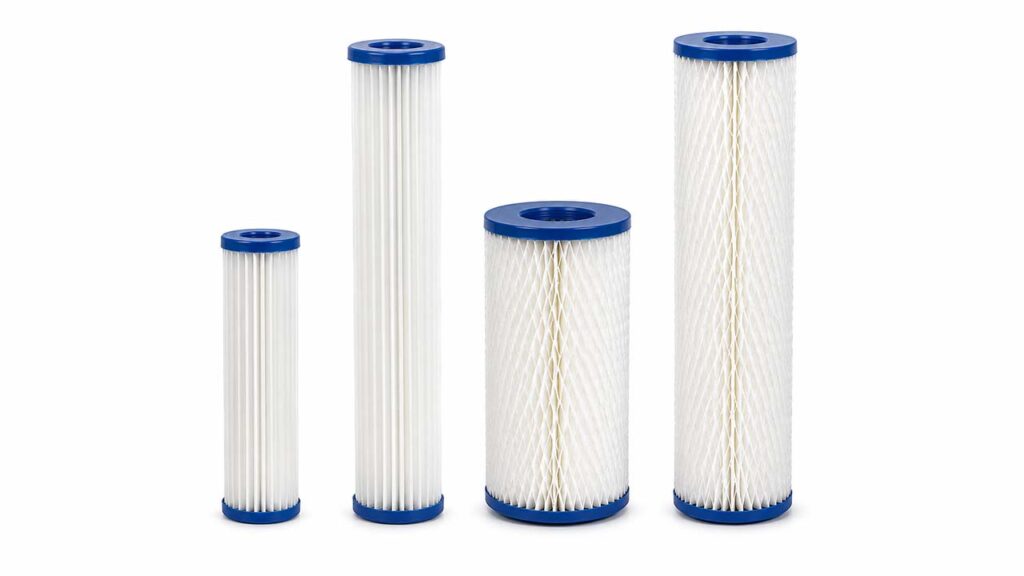
Complete your water treatment system with UltraTec’s range of filtration, softening, and purification solutions. These products are commonly used alongside multimedia filtration systems to improve pretreatment performance, protect downstream equipment, and deliver reliable water quality for commercial and industrial applications.
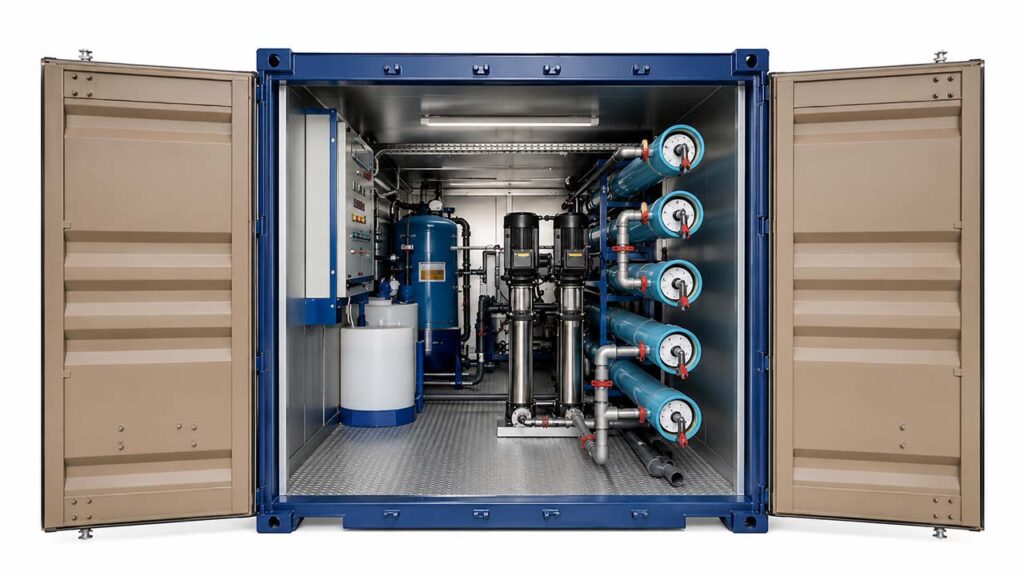
Custom-engineered reverse osmosis systems configured according to feedwater analysis, required production capacity, and site-specific operational requirements.