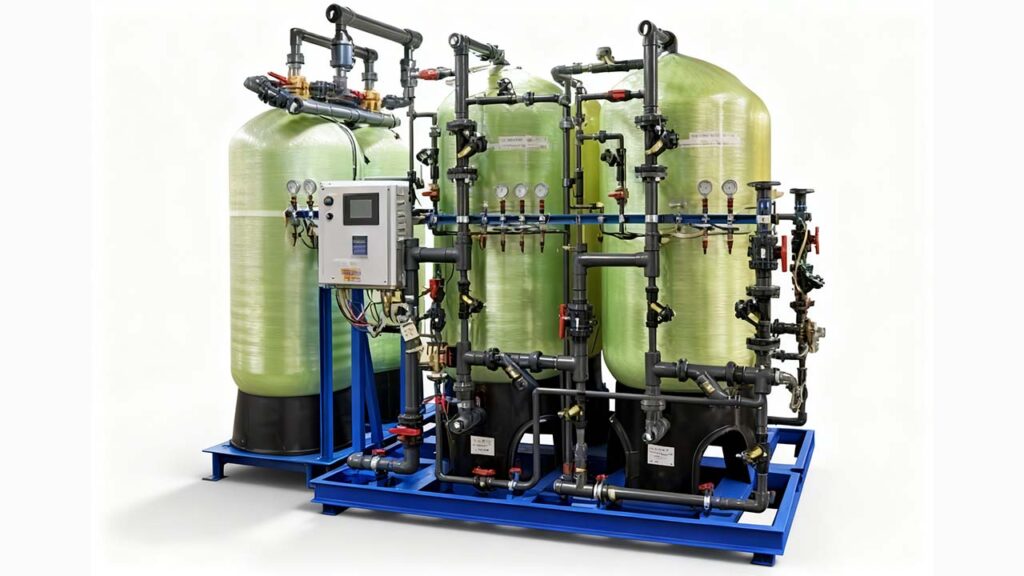
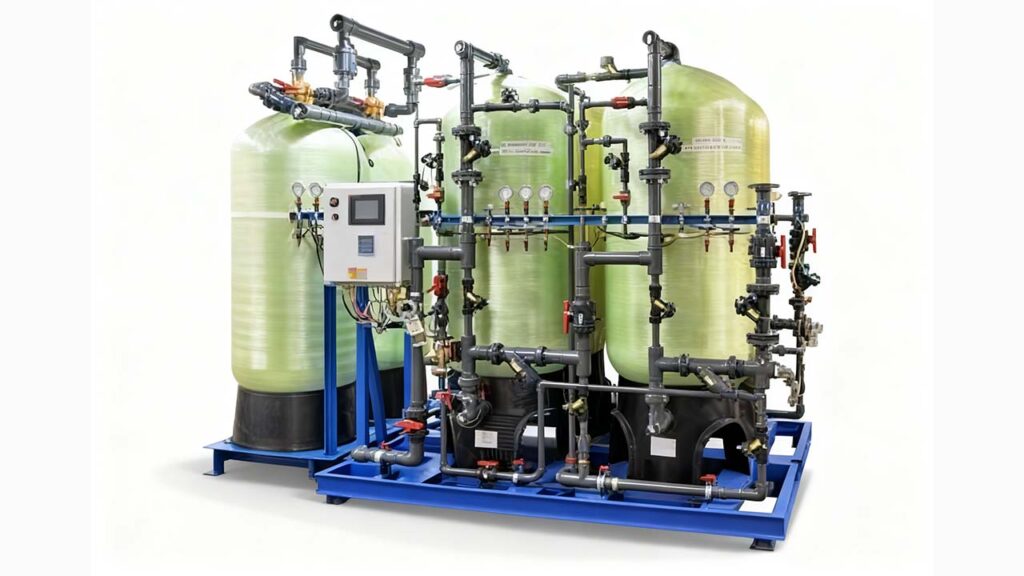
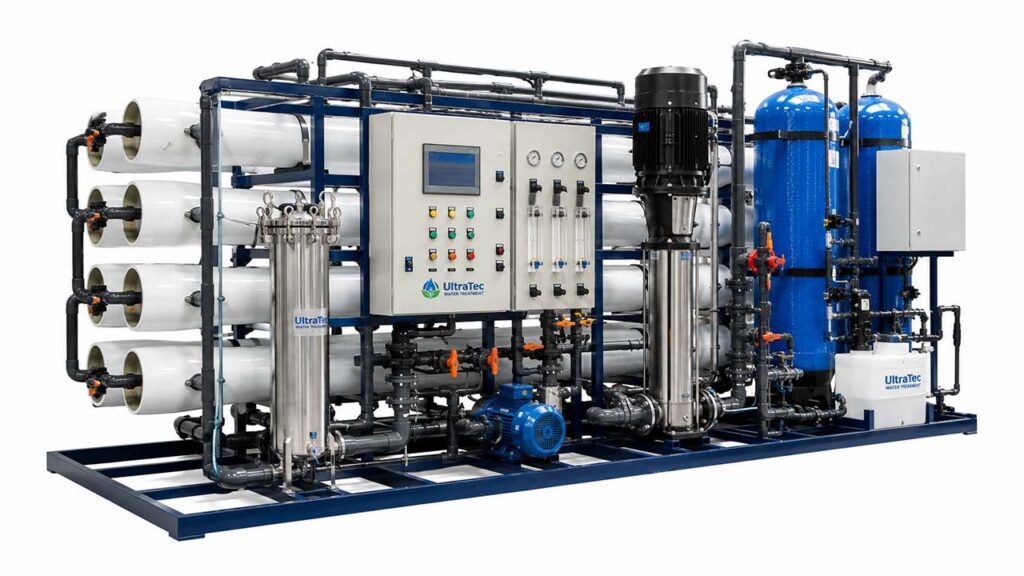
A separate bed deionizer is designed to provide high-quality demineralized water for industrial processes where low-ion water is required. It uses separate cation and anion exchange beds to remove dissolved ionic impurities from water, making it a practical solution for demanding water treatment applications.
The system is suitable for facilities that require consistent deionized water quality, efficient operation, and a dependable treatment setup.
Key Features
Separate cation and anion exchange beds
Effective removal of dissolved ions
Designed for continuous industrial water treatment
Suitable for high-purity water requirements
Durable construction for industrial environments
Easy to operate and maintain
Available for different treatment capacities
Key Specifications
Specification
Details
System Type
Separate Bed Deionizer
Application
Industrial Water Treatment
Treatment Process
Ion Exchange
Bed Configuration
Separate Cation & Anion Beds
Water Output
Demineralized Water
Installation
Industrial
Operation
Designed for Continuous Use
Models
Features
Standard Features
Separate cation and anion exchange vessels
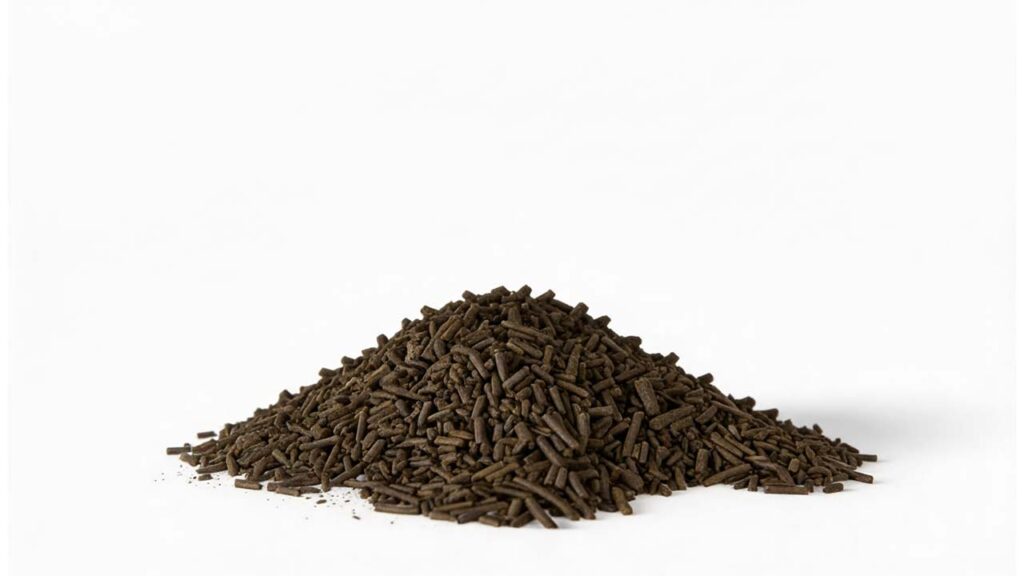
High-quality ion exchange resin filling
FRP or steel pressure vessel construction
Internal distribution and collection system
Manual or automatic regeneration arrangement
Chemical dosing and regeneration connections
Pressure gauges for system monitoring
Industrial piping and valve assembly
Designed for continuous or batch operation
Skid-mounted or floor-mounted configuration
Available Options
Fully automatic PLC-based control system
Acid and caustic chemical dosing systems
Mixed bed polishing unit integration
Conductivity monitoring and control system
Remote monitoring and automation integration
Stainless steel vessel construction
Custom regeneration system configuration
Containerized or modular system design
Applications
The industrial separate bed deionizer is suitable for industries and facilities that require demineralized or low-ion water for their operations.
Industrial manufacturing
Boiler feed water treatment
Pharmaceutical industries
Chemical processing
Electronics manufacturing
Laboratory applications
Power generation facilities
High-purity water treatment
Deionizer for Industrial Use
A deionizer for industrial use provides an effective way to reduce dissolved ionic contaminants before water is used in sensitive industrial processes. The separate-bed configuration allows the cation and anion exchange stages to work independently for efficient demineralization. Compared with systems designed for smaller applications, an industrial DI system can be configured according to the required water flow, capacity, and treatment conditions.
Buy Separate Bed Deionizer
Need a reliable deionization solution for your industrial facility? Choose a separate bed deionizer from Ultratec UAE for dependable demineralized water treatment. Contact Ultratec UAE today for system specifications, capacity options, pricing, and expert guidance, and get the right industrial DI system for your application.
Frequently Asked Questions
What is an Industrial Separate Bed Deionizer?
An Industrial Separate Bed Deionizer uses separate cation and anion exchange resin vessels to remove dissolved mineral ions from water. It is commonly used to produce high-purity water for industrial and process applications.
How is the correct Separate Bed Deionizer selected?
System selection depends on feedwater analysis, required water quality, production capacity, operating conditions, and the intended application. Ultratec configures each system according to project requirements.
Which industries commonly use Separate Bed Deionizers?
These systems are widely used in power plants, pharmaceutical manufacturing, laboratories, electronics production, food and beverage processing, chemical industries, and boiler feedwater treatment applications.
Can the resin be regenerated?
Yes. The ion exchange resins are designed for regeneration using appropriate chemicals and recommended operating procedures. The regeneration method depends on the system configuration and water quality requirements.
Does Ultratec provide installation and technical support in the UAE?
Yes. Ultratec supplies Industrial Separate Bed Deionizers across the UAE and provides installation support, commissioning, maintenance services, and technical assistance for industrial water treatment systems.
Get In Touch
Contact our team in Dubai to discuss your water treatment requirement and receive a solution configured for your site.
Complete your water treatment system with UltraTec’s range of filtration, softening, and purification solutions. These products are commonly used alongside multimedia filtration systems to improve pretreatment performance, protect downstream equipment, and deliver reliable water quality for commercial and industrial applications.
Custom-engineered reverse osmosis systems configured according to feedwater analysis, required production capacity, and site-specific operational requirements.