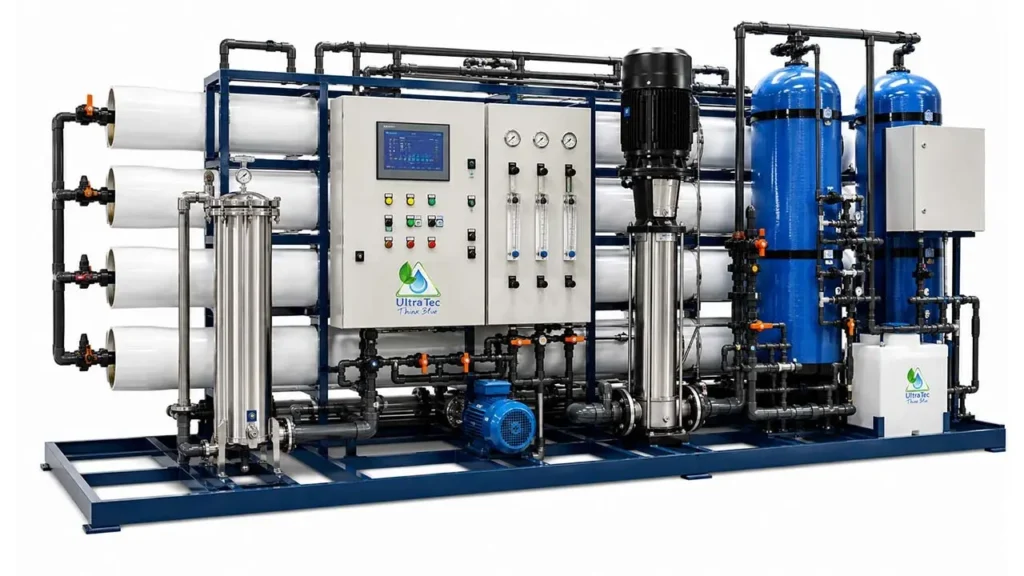
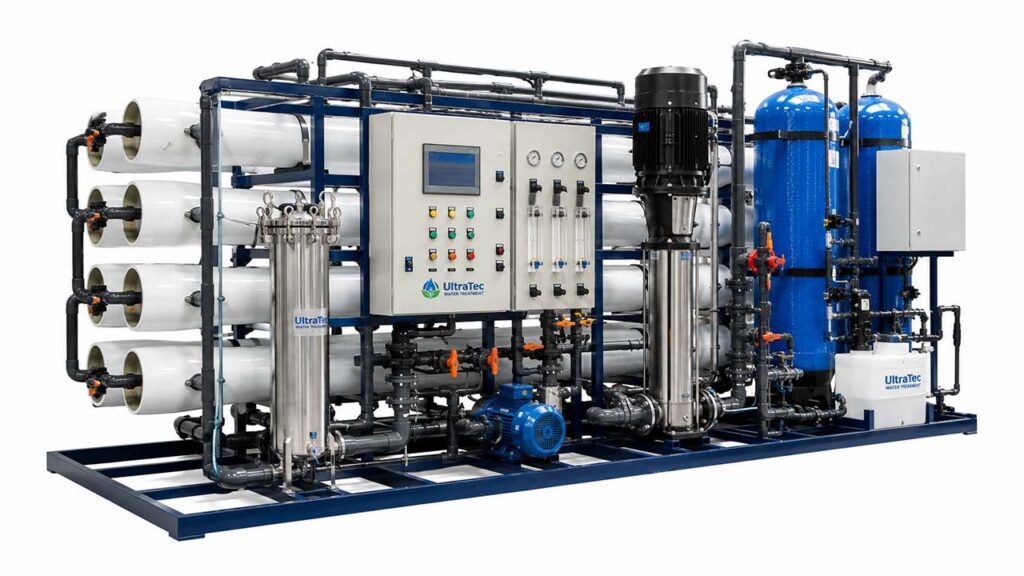
The 40,000 gallon daily reverse osmisis system is an industrial-grade water purification system destined to generate 40,000 gallons every day of clean water. Commercial facilities along with industrial sectors and large-scale operations can trust this system to deliver treated water continuously and dependably.
Through its manufacturing design this reverse osmosis system reduces impurities and dissolved salts with contaminants from feed water. This system functions as an efficient water purification solution for business operations assessing their need for high-volume and consistent water purification.
Key Features
Production capacity of up to 40,000 gallons per day
Designed for industrial and large-scale applications
Efficient reverse osmosis filtration technology
Helps reduce dissolved salts and impurities
Suitable for continuous water treatment operations
Robust design for demanding industrial environments
Customizable according to feed water requirements
Suitable for commercial and industrial water purification
Key Specifications
Specification
Details
Product Type
Industrial Reverse Osmosis System
Capacity
40,000 GPD
Technology
Reverse Osmosis
Application
Industrial & Commercial Water Treatment
System Type
High-Capacity RO Plant
Water Output
Up to 40,000 Gallons Per Day
Installation
Industrial Water Treatment Facilities
Model
Features
Standard Features
Production capacity up to 40,000 gallons per day
Industrial-grade reverse osmosis membrane system
Multi-stage pretreatment compatibility
High-pressure pump assembly
Stainless steel skid-mounted construction available
Automatic membrane flushing system
Integrated TDS monitoring
Pressure gauges and flow meters
PLC or control panel options
Low and high-pressure protection
Chemical dosing integration
Designed for continuous industrial operation
Available Options
Brackish water configuration
Seawater RO configuration
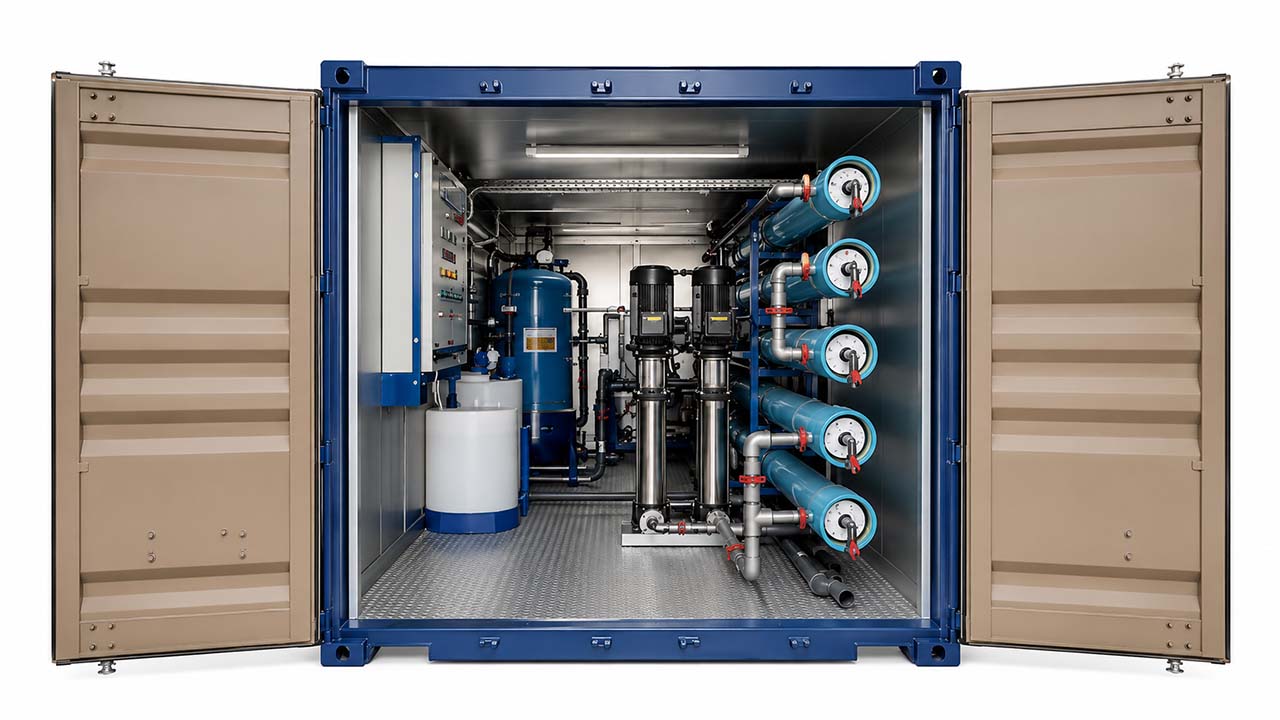
Containerized RO plant design
Stainless steel piping upgrades
Online conductivity monitoring
Automatic CIP (Clean-in-Place) system
Remote monitoring capability
UV sterilization integration
Multimedia filtration package
Water softener pretreatment
Mineral adjustment and post-treatment
Custom storage tanks and transfer pumps
Applications
The 40000 gpd reverse osmosis plant dubai is suitable for facilities requiring high-volume purified water production.
Industrial manufacturing facilities
Hotels and large commercial buildings
Food and beverage industries
Pharmaceutical applications
Boiler and cooling water treatment
Commercial water treatment plants
Process water purification
Large-scale water supply systems
An industrial RO plant 40000 can be configured according to the quality of incoming water and the specific treatment requirements of the facility.
40000 GPD Water Treatment Plant
A 40000 gpdwater treatment plant provides a practical solution for businesses that need reliable purified water production at a large scale. The RO process can significantly reduce dissolved solids and other impurities, helping facilities maintain the required water quality for their operations.
The system can be designed around the site’s feed water conditions, required output, and intended application to provide an appropriate treatment setup.
Why Choose Us?
Ultratec water treatment UAE provides professional water treatment solutions designed around actual project requirements. We can assist with system selection, capacity planning, technical consultation, and installation requirements.
Whether you need an industrial RO plant 40000 for a new facility or want to upgrade an existing water treatment setup, our team can help you select a suitable configuration based on your application.
Buy 40000 GPD RO System
Looking for a high-capacity RO plant for your industrial facility? Choose the 40000 GPD RO System from Ultra Tec UAE for reliable large-scale water purification. Contact us today to get the 40000 GPD RO system price in UAE, technical details, and a solution tailored to your water treatment requirements. Request a quote now and take the next step toward a reliable industrial water treatment system.
Frequently Asked Questions
What type of water can the 40000 GPD RO System treat?
The system can be configured for brackish water, borewell water, municipal water, and other feedwater sources after technical evaluation.
Can the 40,000 GPD RO System be customized for our facility?
Yes. Ultratec configures every system according to feedwater analysis, production capacity, installation space, and process requirements.
Is pretreatment required before reverse osmosis?
Pretreatment is typically recommended to protect RO membranes and improve overall system performance. The required pretreatment depends on feedwater quality.
Does Ultratec provide installation and commissioning?
Yes. Ultratec provides installation assistance, commissioning, and technical support throughout the UAE.
Can monitoring and automation be included?
Yes. Ultratec can supply systems with PLC controls, TDS monitoring, conductivity monitoring, automatic flushing, alarms, and other automation features.
Get In Touch
Contact our team in Dubai to discuss your water treatment requirement and receive a solution configured for your site.
Explore UltraTec’s range of industrial water treatment systems designed to meet diverse process water, high-purity water, and desalination requirements. From industrial reverse osmosis plants and pre-treatment systems to advanced filtration and water treatment equipment, our engineered solutions help industries improve water quality, increase operational efficiency, and achieve long-term reliability across a wide range of applications in the UAE and GCC.
Industrial reverse osmosis plant designed for medium-capacity water treatment with efficient membrane filtration for commercial and industrial applications.
High-capacity industrial RO plant engineered for large-scale water production and continuous operation across manufacturing, utilities, and commercial applications.
A containerized RO plant designed for 20,000 GPD with a feed water concentration of 5,000 ppm offers a versatile solution for water purification needs.
Custom-engineered reverse osmosis systems configured according to feedwater analysis, required production capacity, and site-specific operational requirements.